A short personal update: I have been promoted to Director of Engineering at Snap.
Now back to shipping Specs.
A short personal update: I have been promoted to Director of Engineering at Snap.
Now back to shipping Specs.
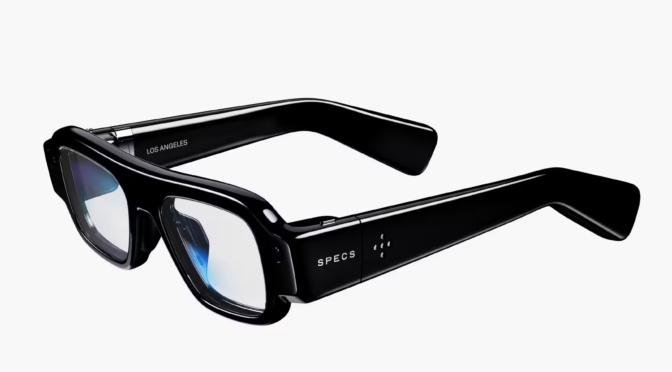
Snap unveiled Specs at AWE today: the first consumer AR glasses from Snap. Lighter and slimmer than Spectacles, see-through displays, and an operating system built for it.
Specs OS is the next step of Snap OS. This is the device all the previous generations were building towards. Ten years after my first AR headset at DAQRI, there is finally one you can go and buy.
More at specs.com.
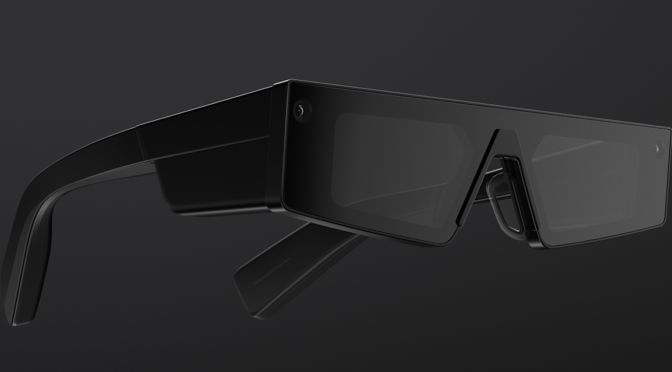
Today Snap announced the fifth generation of Spectacles and, for the first time, Snap OS, the operating system that runs them. Standalone AR glasses with see-through waveguide displays, hand and voice input, and a developer program so people can build and ship Lenses for them starting today.
Snap OS is what my teams have been working on for years: the graphics stack, display pipeline, platform and porting work, and the browser. Seeing it get a name and a stage of its own is a big moment for all of us in Vienna.
Developers can apply at spectacles.com.
First, some news I never got around to posting here: DAQRI closed down in September 2019 and since November 2019 I have been a Software Engineering Manager at Snap, still in Vienna, leading the OS and graphics teams I helped build at DAQRI.
And today there is finally something to show for it. At the Snap Partner Summit Evan Spiegel presented the next generation of Spectacles: Snap’s first glasses with real augmented reality displays. Dual waveguide displays, 6DoF tracking all in a frame of 134 grams. Their motion to photon latency is amazing.
They are not for sale. This generation goes to AR creators so they can start building Lenses for glasses, and Snap can learn what it takes to make this work.
Four years after the DAQRI Smart Glasses shipped, this is the device I have been waiting for.
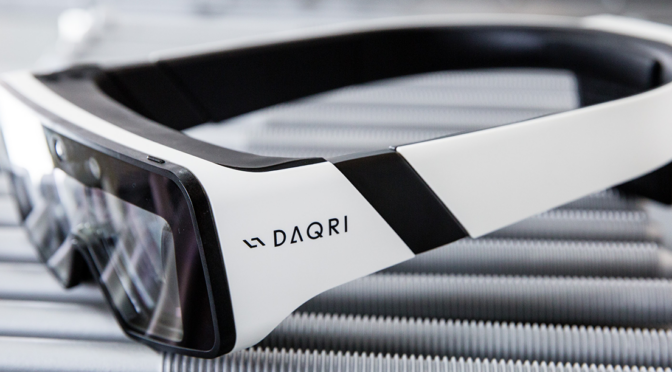
Today the DAQRI Smart Glasses started shipping to customers. After the Smart Helmet this is the second AR device I got to help build at DAQRI, and the first one where our Vienna team was on board from the very beginning.
The glasses are a lot lighter than the helmet: an Intel Core m7 compute pack on a cable, a wide field of view see-through display, inside-out 6DoF tracking.
New chapter: after two great years at Qualcomm I joined DAQRI in the summer as one of the founding members of the new Vienna office.
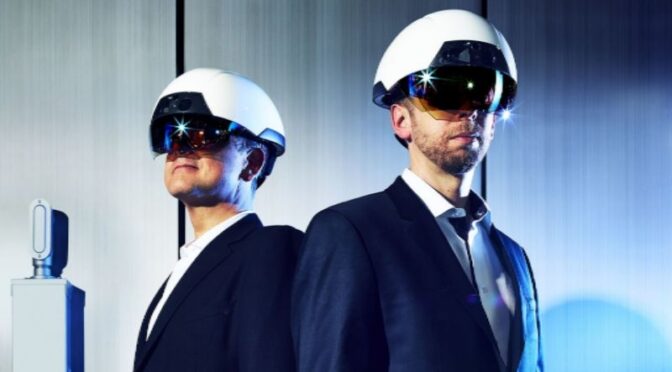
The product we are working on is the DAQRI Smart Helmet, an industrial augmented reality headset that started shipping to customers earlier this year. It is a hard hat with an Intel Core m7, a RealSense depth camera, a thermal camera and see-through displays.
Shipping hardware that people actually wear at work is a very different game. I like it.